 The Way
The King Who Smashed the Bronze Snake
Breaking what everyone bowed to
Story
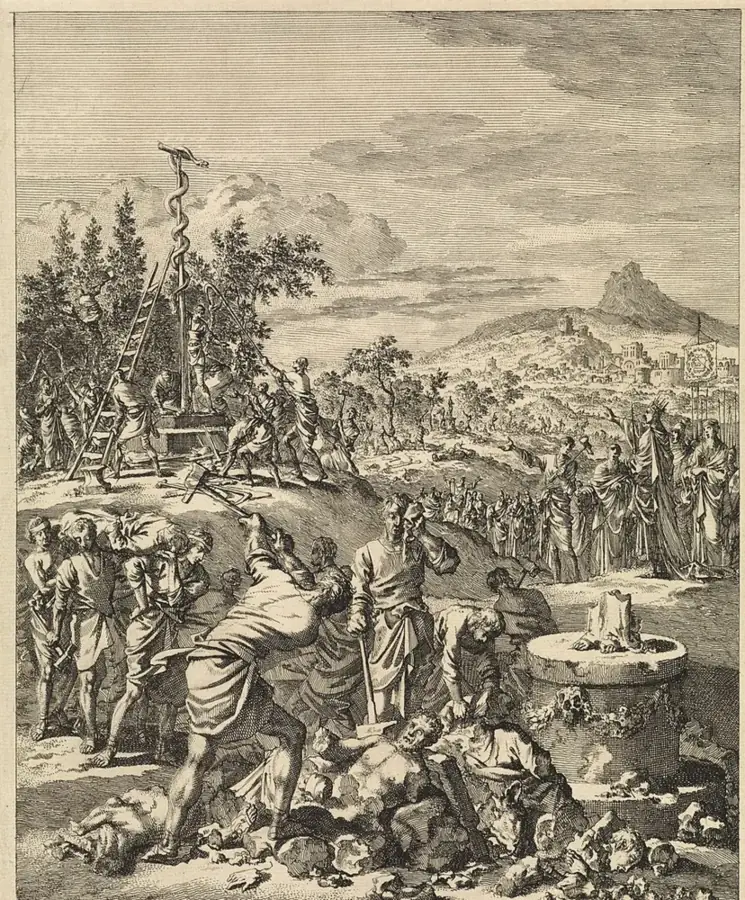
Incense smoke curled around a snake made of bronze. People bowed down before it and burned incense. It was the very snake Moses was said to have lifted up on a pole in the wilderness, long, long ago. Hezekiah, who had become king of Judah at twenty-five, stood before it. He was the son of King Ahaz, but Hezekiah was a king who had chosen to follow the way of his ancestor David rather than the way of his father.
First Hezekiah tore down the high places. He smashed the sacred pillars and cut down the Asherah poles. Then he came to the bronze snake. It had once been a sign that saved Israel's life, but now it had become a thing people bowed down to instead of God. Hezekiah broke the bronze snake to pieces and called it Nehushtan. The name is usually taken to mean a piece of bronze.
Hezekiah trusted in the Lord, the God of Israel. Among the kings of Judah, none before him or after him was like him. Hezekiah held fast to the Lord and did not turn away, and the Lord was with him, and wherever he went he succeeded. At last Hezekiah turned his back on the mighty Assyrian empire and refused to serve it any longer. Dark clouds began to gather in the northern sky.
Walk this scene on the map →Words of God and the Prophets
Hezekiah trusted in the Lord, the God of Israel. Among all the kings of Judah, none who came before him and none who came after him was like him.
He broke to pieces the bronze snake Moses had made, because until then the people of Israel had been burning incense to it. He called it Nehushtan.
He held fast to the Lord and did not turn away, and he kept the commands the Lord had given Moses. The Lord was with him, and wherever he went he succeeded.
The sayings are fresh renderings of the original meaning in today's language. Text: 2 Kgs 18:1–8
Background
The bronze snake was made by Moses in Numbers 21 to save the people who had been bitten by fiery serpents. In Hebrew the name Nehushtan calls to mind both “bronze” and “snake,” and it is sometimes explained as meaning “a piece of bronze.”
Pause and Reflect
Even if I have held on to something for a long time, can I let it go if it comes before God?