 The Way
Slavery in Egypt
A king who did not know Joseph, and sons thrown into the river
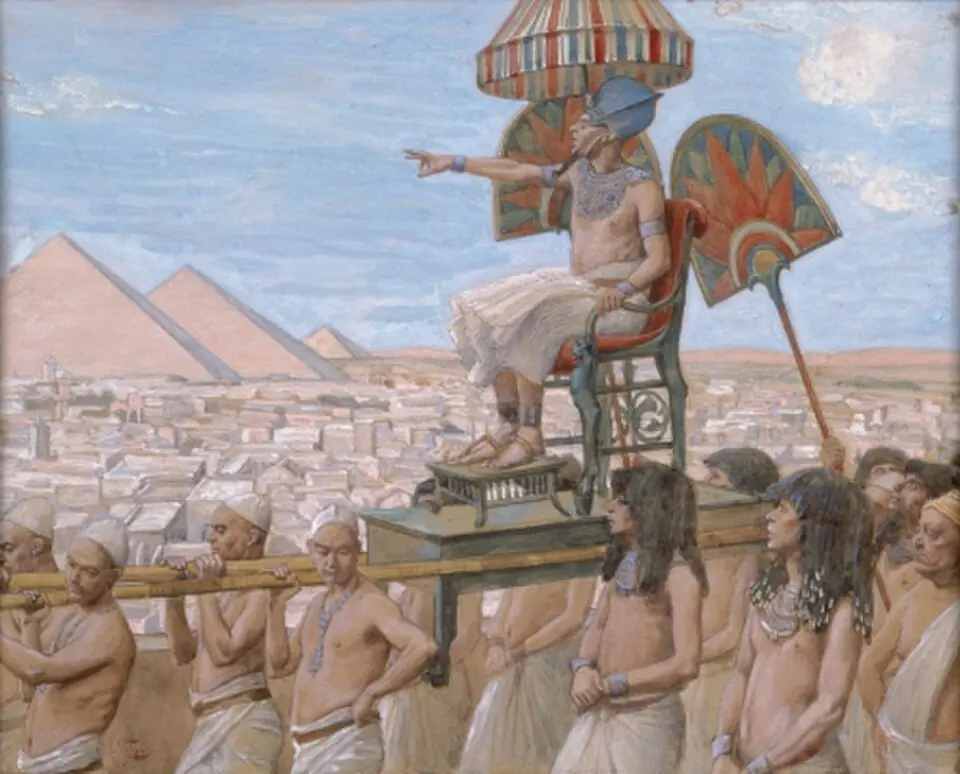
Story
In Goshen, the rich land where the Nile spills into the sea, the whole household of Jacob numbered seventy. Joseph died, and his brothers, and all that generation, yet the children of Israel had children and more children until they filled the land. Then a new king came to rule over Egypt, a king who did not know Joseph. He said to his people, look, this people is more numerous and stronger than we are. If war comes, they may join our enemies and fight against us.
Under the burning sun the sound of mud being trodden and bricks being shaped never stopped. The taskmasters drove them without rest. And so Pharaoh's store cities rose, Pithom and Rameses. Yet the harder they were oppressed, the more Israel grew and spread. The Egyptians came to dread them, and worked them more cruelly still.
Pharaoh summoned the Hebrew midwives, Shiphrah and Puah, and gave them an order. When you deliver a child, if it is a boy, kill him, and if it is a girl, let her live. But the midwives feared God, and they let the babies live. At last the king gave an order to all his people. Every boy born to the Hebrews, throw him into the Nile. From that day the waters of the Nile ran dark.
Walk this scene on the map →God's Words
Look, the people of Israel have grown more numerous and stronger than we are. If war breaks out they may join our enemies and fight against us. Let us deal with them shrewdly.
Hebrew women are not like Egyptian women. They are strong, and they give birth before the midwife even arrives.
Every boy born to the Hebrews, throw into the Nile. You may let the girls live.
The sayings are fresh renderings of the original meaning in today's language. Text: Ex 1:1–22
Background
Pithom and Rameses were store cities where grain and supplies were kept. Because of the name Rameses, some date the exodus to the thirteenth century BC under Ramesses II, but this journey follows the earlier date given in 1 Kings 6:1.
Pause and Reflect
When is it that I need to fear God more than what people think?