 The Way
Bitter Water Made Sweet
The first thirst, where the singing stopped
Story
When the song by the sea had faded, Moses led the people away from the Red Sea into the Wilderness of Shur. For three days they walked and found no water. The sand underfoot burned hot, their lips cracked, and every step grew heavier. Wherever they looked there was only rock and sand, and even the wind carried the smell of dryness.
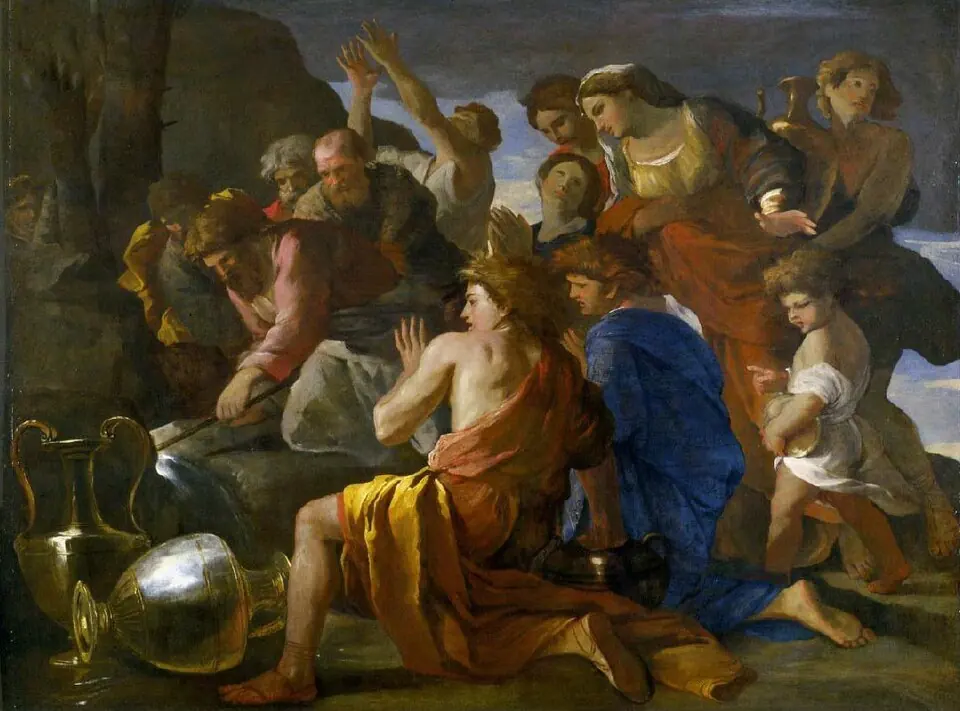
At last they came to Marah and found water. But it was too bitter to drink. The people grumbled against Moses. What are we supposed to drink? When Moses cried out to the Lord, the Lord showed him a piece of wood. He threw it into the water, and the bitter water turned sweet.
There the Lord gave the people a statute and a rule, and as he put them to the test, he said. If you listen to my voice and do what is right in my eyes, I will bring on you none of the diseases I brought on Egypt. I am the Lord who heals you. Then they came to Elim. Twelve springs were there and seventy palm trees, and by the water they pitched their tents.
Walk this scene on the map →God's Words
If you listen carefully to the voice of the Lord your God and do what is right in my eyes, I will not bring on you any of the diseases I brought on Egypt. I am the Lord who heals you.
What are we supposed to drink?
The sayings are fresh renderings of the original meaning in today's language. Text: Ex 15:22–27
Background
Marah means bitter in Hebrew. Some identify Marah with Ain Hawara on the eastern shore of the Gulf of Suez and Elim with Wadi Gharandel, but the exact locations of both are unknown and views differ.
Pause and Reflect
When life tastes bitter, do I pray before I complain?